

DevOps is a transformative approach to software development and IT operations, aiming to enhance collaboration, efficiency, and continuous delivery of high-quality software. By integrating development (Dev) and operations (Ops) teams, DevOps fosters a culture of collaboration and shared responsibility, leading to faster development cycles and more reliable releases.
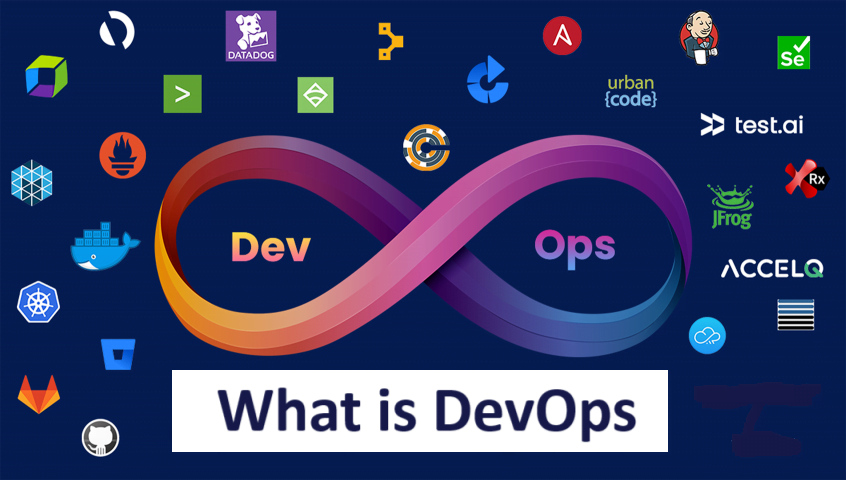
Table of Contents
What is DevOps?
DevOps is a set of practices that combine software development and IT operations to shorten the development lifecycle while delivering high-quality software continuously. The primary goal of DevOps is to bridge the gap between development and operations teams, fostering a culture of collaboration, shared responsibility, and continuous improvement.
Principles of DevOps
- Collaboration and Communication: DevOps emphasizes seamless collaboration and communication between development and operations teams. This principle ensures that all stakeholders are aligned and working towards common goals.
- Continuous Integration and Continuous Delivery (CI/CD): CI/CD pipelines automate the process of integrating code changes and delivering them to production. Continuous integration ensures that code changes are tested frequently, while continuous delivery automates the deployment process.
- Infrastructure as Code (IaC): IaC involves managing and provisioning infrastructure through code, allowing for version control, automated testing, and consistency across environments.
- Automation: Automation is central to DevOps, enabling repetitive tasks to be performed efficiently and accurately. This includes automated testing, deployment, and monitoring.
- Monitoring and Logging: Continuous monitoring and logging of applications and infrastructure provide insights into performance, security, and potential issues. This data-driven approach helps in proactive problem-solving and optimization.
- Security: DevSecOps integrates security practices into the DevOps workflow, ensuring that security is a continuous and integrated part of the development process.
Key Practices of DevOps
1. Continuous Integration (CI):
Continuous Integration is the practice of integrating code changes into a shared repository frequently. Each integration is automatically verified by automated tests to detect issues early.
- Benefits:
- Early detection of defects
- Reduced integration problems
- Faster feedback loops
2. Continuous Delivery (CD):
Continuous Delivery extends CI by automatically deploying all code changes to a testing or production environment after the build stage. This ensures that the software can be released reliably at any time.
- Benefits:
- Faster and reliable releases
- Reduced risk of deployment failures
- Enhanced ability to respond to business needs
3. Infrastructure as Code (IaC):
IaC involves managing infrastructure through code and automation. Tools like Terraform and AWS CloudFormation enable the definition and provisioning of infrastructure in a consistent and repeatable manner.
- Benefits:
- Consistency across environments
- Easier to track and version infrastructure changes
- Improved collaboration through version-controlled infrastructure code
4. Automated Testing:
Automated testing is essential for CI/CD pipelines, ensuring that code changes do not introduce new bugs. Unit tests, integration tests, and end-to-end tests are commonly automated.
- Benefits:
- Increased test coverage
- Faster feedback on code quality
- Reduced manual testing effort
5. Continuous Monitoring:
Continuous monitoring involves tracking the performance and availability of applications and infrastructure in real time. Tools like Prometheus, Grafana, and ELK Stack are commonly used for monitoring and logging.
- Benefits:
- Proactive identification of issues
- Better performance optimization
- Enhanced visibility into system health
6. Configuration Management:
Configuration management tools like Ansible, Chef, and Puppet automate the deployment and management of software configurations across environments.
- Benefits:
- Consistent and repeatable deployments
- Reduced configuration drift
- Easier management of complex environments
Essential DevOps Tools
- Version Control:
- Git: A distributed version control system that allows teams to track changes in source code during software development.
- CI/CD:
- Jenkins: An open-source automation server that supports building, deploying, and automating software development projects.
- GitLab CI/CD: Integrated CI/CD capabilities in GitLab for automating the entire DevOps lifecycle.
- Infrastructure as Code (IaC):
- Terraform: An open-source IaC tool that allows for the safe and predictable creation, change, and versioning of infrastructure.
- AWS CloudFormation: A service that allows you to model and set up your Amazon Web Services resources.
- Configuration Management:
- Ansible: An open-source tool for IT configuration management, deployment, and orchestration.
- Puppet: A configuration management tool that automates the provisioning, configuration, and management of infrastructure.
- Monitoring and Logging:
- Prometheus: An open-source monitoring and alerting toolkit.
- Grafana: An open-source platform for monitoring and observability.
- ELK Stack (Elasticsearch, Logstash, Kibana): A powerful combination of tools for searching, analyzing, and visualizing log data in real time.
Benefits of DevOps
- Faster Time to Market:
DevOps practices enable faster development and deployment cycles, reducing the time it takes to bring new features and products to market.
- Improved Collaboration and Communication:
By breaking down silos between development and operations teams, DevOps fosters a culture of collaboration and shared responsibility, leading to more efficient workflows.
- Higher Quality Software:
Automated testing, continuous integration, and continuous delivery ensure that code changes are thoroughly tested and deployed reliably, resulting in higher quality software.
- Enhanced Security:
DevSecOps integrates security practices into the DevOps workflow, ensuring that security is a continuous and integrated part of the development process.
- Scalability and Flexibility:
Infrastructure as Code and configuration management tools enable scalable and flexible infrastructure, allowing organizations to adapt quickly to changing business needs.
- Increased Efficiency and Reduced Costs:
Automation of repetitive tasks and efficient resource management lead to increased operational efficiency and reduced costs.
Implementing DevOps in Your Organization
- Assess Current Processes:
Evaluate your current development and operations processes to identify bottlenecks, inefficiencies, and areas for improvement.
- Define Goals and Metrics:
Set clear goals for your DevOps implementation, such as faster release cycles, improved collaboration, and higher quality software. Define metrics to measure progress and success.
- Build a DevOps Culture:
Foster a culture of collaboration, shared responsibility, and continuous improvement. Encourage open communication and collaboration between development and operations teams.
- Adopt DevOps Practices:
Implement key DevOps practices such as continuous integration, continuous delivery, infrastructure as code, and automated testing. Use appropriate tools to support these practices.
- Invest in Training and Education:
Provide training and education for your teams to ensure they have the skills and knowledge required to implement and manage DevOps practices effectively.
- Start Small and Scale:
Begin with small projects to implement DevOps practices and tools, then gradually scale up as your teams gain experience and confidence.
- Monitor and Iterate:
Continuously monitor your DevOps processes and practices to identify areas for improvement. Use feedback and metrics to iterate and refine your approach.
Case Studies: Successful DevOps Implementations
Netflix:
Netflix has implemented a robust DevOps culture that enables it to deploy thousands of times per day. By using continuous integration, continuous delivery, and extensive automation, Netflix ensures high availability and performance for its streaming services.
Amazon’s adoption of DevOps practices has allowed it to achieve faster release cycles and improved operational efficiency. By using infrastructure as code, continuous deployment, and monitoring tools, Amazon can scale its services to meet the demands of its global customer base.
Etsy:
Etsy has successfully implemented DevOps to improve collaboration and streamline its development and deployment processes. By adopting continuous integration, continuous delivery, and automated testing, Etsy can deliver new features and updates quickly and reliably.
Conclusion
DevOps is a transformative approach that combines development and operations to enhance collaboration, efficiency, and continuous delivery of high-quality software. By adopting DevOps principles and practices, organizations can achieve faster time to market, improved collaboration, higher quality software, enhanced security, and increased operational efficiency.
Implementing DevOps requires a cultural shift, investment in training and education, and the adoption of appropriate tools and practices. By starting small, monitoring progress, and iterating based on feedback, organizations can successfully implement DevOps and reap its benefits.
DevOps continues to evolve, offering new opportunities for innovation and improvement in software development and IT operations. Staying informed about the latest trends and best practices in DevOps will help organizations remain competitive and agile in the ever-changing technology landscape.
References
These references provide additional resources for further reading and a deeper understanding of DevOps and its practices.
Google Cloud: Comprehensive Guide to Cloud Computing Services
DevOps, DevOps principles, DevOps practices, continuous integration, continuous delivery, CI/CD, DevOps tools, DevOps benefits, software development, IT operations
