


The automotive industry is experiencing a technological revolution that’s transforming how we drive, interact with our vehicles, and think about transportation. From advanced driver assistance systems to groundbreaking electric powertrains, modern cars are equipped with innovations that seemed like science fiction just a decade ago. Let’s explore the most significant technologies reshaping the automotive landscape and the top variants that showcase these advancements.

Revolutionary Technologies Defining Modern Automobiles
Electric Vehicle Technology and Advanced Battery Systems
Top Car Technologies Electric vehicles have moved from niche products to mainstream options, powered by increasingly sophisticated battery technology. Lithium-ion batteries have evolved to offer greater energy density, faster charging capabilities, and extended range. Modern EVs can travel over 300 miles on a single charge, with some premium models exceeding 500 miles. Solid-state batteries, currently in development, promise even greater improvements in safety, charging speed, and energy storage.
Autonomous Driving and Advanced Driver Assistance Systems (ADAS)
Self-driving technology represents one of the most ambitious technological pursuits in automotive history. While fully autonomous vehicles remain in testing phases, advanced driver assistance systems have become standard in many vehicles. These systems include adaptive cruise control, lane-keeping assistance, automatic emergency braking, blind-spot monitoring, and parking assistance. Using a combination of cameras, radar, lidar, and ultrasonic sensors, these technologies work together to prevent accidents and reduce driver fatigue.
Connectivity and Infotainment Innovation
Modern vehicles function as sophisticated connected devices. Over-the-air software updates allow manufacturers to improve vehicle performance, add new features, and fix issues without requiring a dealership visit. Advanced infotainment systems integrate seamlessly with smartphones, offering voice-activated controls, real-time navigation with traffic updates, and streaming entertainment. Vehicle-to-everything (V2X) communication technology enables cars to communicate with other vehicles, infrastructure, and pedestrians, enhancing safety and traffic flow.
Hybrid Powertrains and Plug-in Technology
Hybrid vehicles bridge the gap between traditional combustion engines and fully electric vehicles. Modern hybrid systems employ sophisticated power management strategies that optimize fuel efficiency while maintaining performance. Plug-in hybrids (PHEVs) offer the flexibility of electric driving for daily commutes while retaining gasoline range for longer journeys, addressing range anxiety concerns.
Augmented Reality and Head-Up Displays
Augmented reality head-up displays project crucial information directly onto the windshield in the driver’s line of sight. These systems can highlight navigation directions, identify potential hazards, display speed limits, and show vehicle data without requiring drivers to look away from the road. This technology significantly enhances safety and convenience. Top Car Technologies
Advanced Materials and Lightweight Construction
Modern vehicles increasingly incorporate advanced materials including carbon fiber, aluminum alloys, and high-strength steel. These materials reduce vehicle weight, improving efficiency and performance while maintaining or enhancing safety standards. Some manufacturers are exploring the use of sustainable materials, including recycled plastics and natural fibers. Top Car Technologies
Biometric and Personalization Technologies
Biometric systems are becoming more prevalent, using fingerprint recognition, facial recognition, and even heartbeat monitoring for vehicle access and personalization. These systems can automatically adjust seat positions, mirror angles, climate control, and entertainment preferences based on the identified driver. Top Car Technologies
Developer Laptops: Top Developer Laptops in 2024 for Every Need
Top Variants Showcasing Cutting-Edge Technology
Tesla Model S Plaid
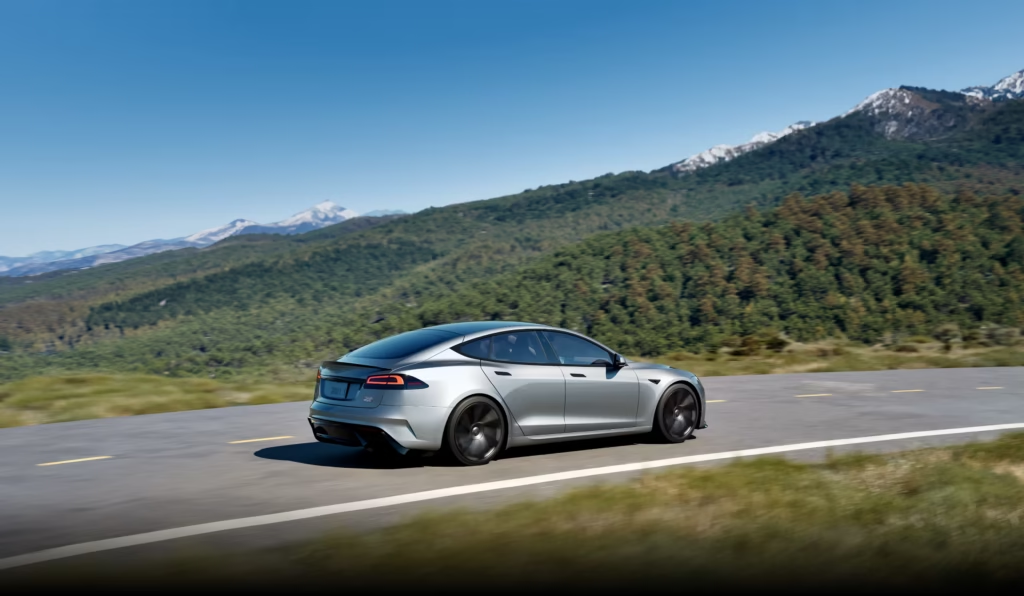
The Model S Plaid represents the pinnacle of Tesla’s electric vehicle technology. With tri-motor all-wheel drive producing over 1,000 horsepower, it accelerates from 0-60 mph in under two seconds. The vehicle features Tesla’s Autopilot system, a massive 17-inch touchscreen interface, over-the-air updates, and an estimated range exceeding 390 miles. Its minimalist interior design focuses on the central touchscreen, representing a radical departure from traditional automotive interfaces. Top Car Technologies
Mercedes-Benz EQS
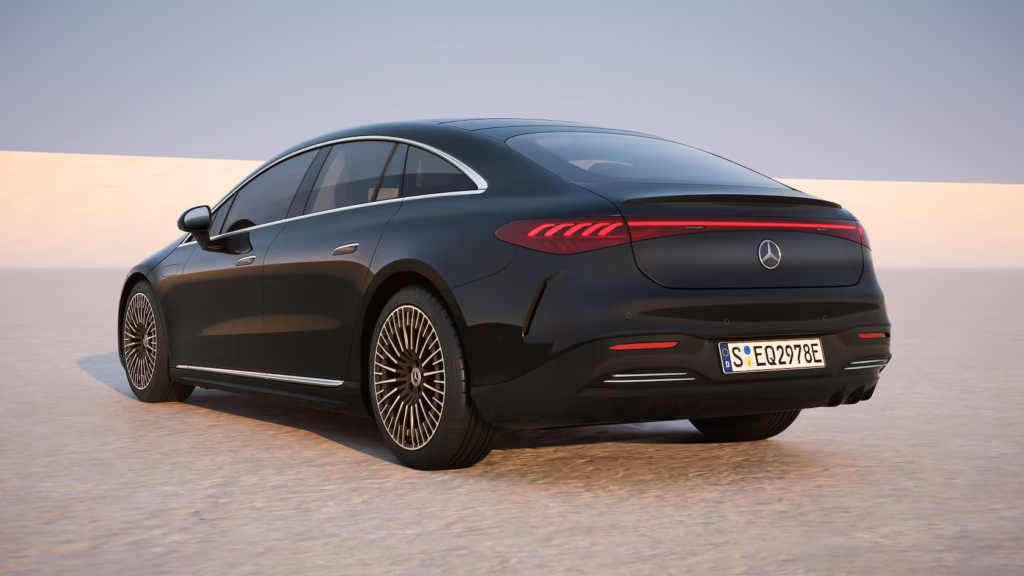
Mercedes-Benz’s flagship electric sedan combines luxury with advanced technology. The EQS features the MBUX Hyperscreen, a 56-inch curved glass display spanning the entire dashboard. It offers up to 350 miles of range, advanced autonomous driving capabilities through Drive Pilot, and an interior crafted with sustainable materials. The vehicle’s aerodynamic design achieves an impressive drag coefficient, contributing to its efficiency. Top Car Technologies
BMW iX

BMW’s electric SUV showcases the brand’s vision for sustainable luxury. The iX features fifth-generation eDrive technology, offering up to 324 miles of range. Its hexagonal steering wheel includes touch-sensitive controls, and the vehicle offers 5G connectivity, over-the-air updates, and an advanced augmented reality head-up display. The interior uses sustainable materials including recycled plastics and FSC-certified wood.
Lucid Air Dream Edition
Lucid Motors’ flagship sedan boasts an EPA-estimated range of over 500 miles, the longest of any production electric vehicle. Its compact electric motor technology allows for a spacious interior despite the vehicle’s sleek exterior. The Air features a 34-inch curved Glass Cockpit display, DreamDrive advanced driver assistance system, and charging capability that can add 300 miles of range in just 20 minutes.
Porsche Taycan Turbo S

Porsche’s first fully electric vehicle maintains the brand’s performance heritage while embracing electrification. The Taycan Turbo S delivers up to 750 horsepower with overboost, achieving 0-60 mph in 2.6 seconds. Its 800-volt architecture enables rapid charging, and the vehicle features Porsche’s advanced chassis control systems, a curved digital display, and exceptional handling characteristics that rival traditional sports cars.
Ford F-150 Lightning
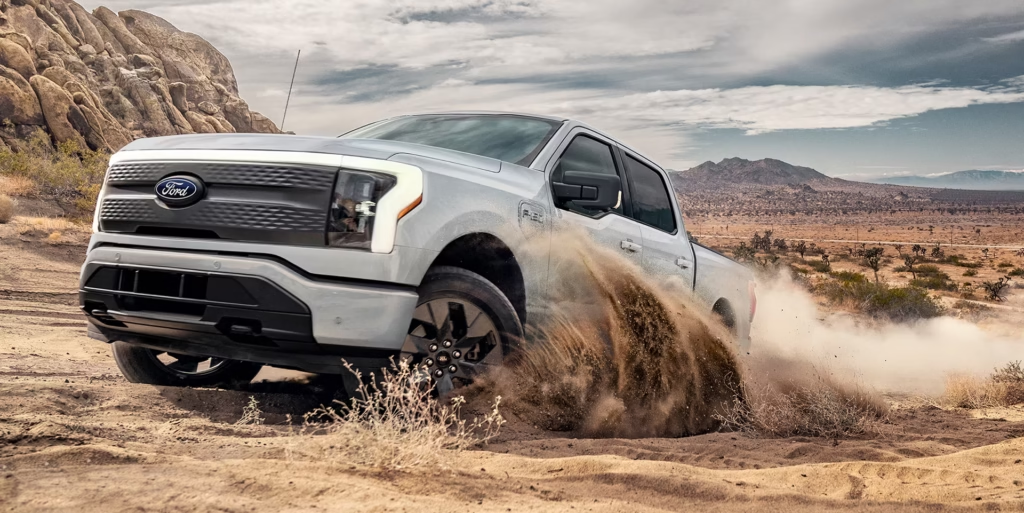
Ford’s electric version of America’s best-selling pickup truck demonstrates how traditional vehicles can be transformed through electrification. The Lightning offers impressive towing capacity, bi-directional charging capability that can power homes during outages, a front trunk providing additional storage, and Ford’s BlueCruise hands-free highway driving system. It represents the democratization of electric vehicle technology in the mainstream market. Top Car Technologies
This electric adventure truck combines off-road capability with cutting-edge technology. Featuring quad-motor all-wheel drive, adjustable air suspension, and over 300 miles of range, the R1T includes unique features like a “gear tunnel” for storage, a pull-out camp kitchen, and sophisticated off-road driving modes. Its large touchscreen interface and over-the-air updates keep the vehicle current with the latest features. Top Car Technologies
Hyundai IONIQ 5

Hyundai’s dedicated electric platform vehicle showcases how technology can be delivered at a more accessible price point. The IONIQ 5 features 800-volt ultra-fast charging, vehicle-to-load capability that can power external devices, a spacious interior with flat floor and sliding console, and advanced driver assistance systems. Its retro-futuristic design combined with practical technology makes it a compelling option in the growing EV market.
The Road Ahead
The technologies showcased in today’s vehicles represent just the beginning of automotive innovation. As artificial intelligence becomes more sophisticated, vehicles will offer increasingly personalized experiences and enhanced safety features. Top Car Technologies The continued development of battery technology will further increase range and reduce charging times, while hydrogen fuel cells may emerge as an alternative for certain applications.
The integration of sustainable materials and manufacturing processes reflects the industry’s commitment to reducing environmental impact beyond just eliminating tailpipe emissions. Top Car Technologies As connectivity improves, vehicles will become more integrated with smart home systems and urban infrastructure, contributing to more efficient transportation networks.
For consumers, these advances mean safer, more efficient, and more enjoyable vehicles. Whether prioritizing performance, luxury, sustainability, or practicality, modern automotive technology offers options that seemed impossible just years ago. As these technologies continue to evolve and become more accessible, they promise to reshape not just how we drive, but how we think about personal transportation in the 21st century. Top Car Technologies
